


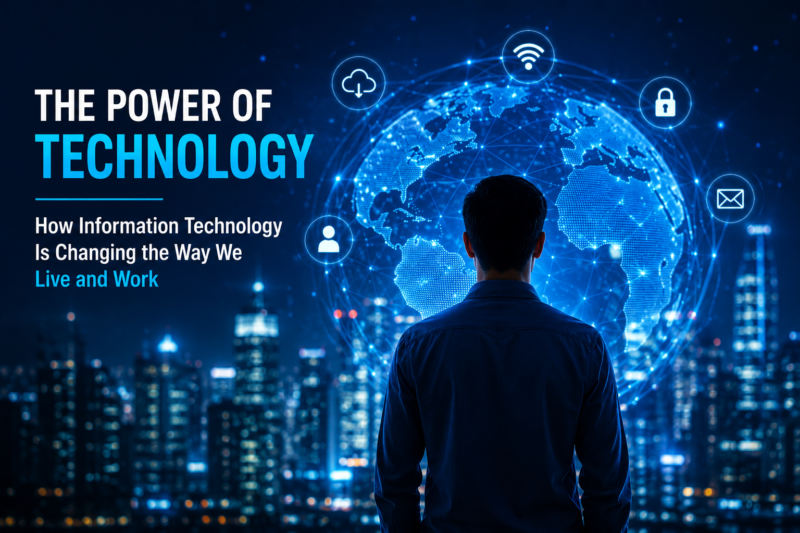
Technology has become an essential part of everyday life. From the smartphone in your hand to the software used by businesses, technology influences how people communicate, work, learn, shop, travel, and entertain themselves. What once seemed like science fiction is now part of normal daily routines.
Information technology,(informāciju tehnoloģijas), often called IT, is one of the most important areas of modern technology. It includes computers, networks, software, cloud services, cybersecurity, databases, artificial intelligence, and many other digital systems that help people and organizations manage information.
For businesses in particular, technology is no longer simply a useful tool. It has become a major part of how companies compete, serve customers, protect information, and grow.
But what exactly is technology, and why has it become so important? Let’s take a closer look at the role of modern technology and how it is shaping the future.
What Is Technology?
Technology refers to the tools, systems, techniques, and processes people create to solve problems and make tasks easier or more efficient.
When people hear the word “technology,” they often think about smartphones, computers, or the internet. However, technology is much broader than consumer electronics. It includes everything from medical equipment and transportation systems to industrial machines, software applications, and communication networks.
Modern technology is particularly connected to digital information. Computers can process enormous amounts of data in seconds, while internet-connected devices allow people to communicate and share information almost instantly.
This development has transformed both personal and professional life.
For example, a person can now attend a meeting with colleagues on the other side of the world without leaving home. A small business can sell products to customers across the United States through an online store. Students can access educational resources from universities and organizations around the world.
These possibilities demonstrate how deeply technology has become connected to modern society.
The Importance of Information Technology
Information technology focuses on using computers and digital systems to create, store, process, protect, and exchange information.
IT is used in almost every major industry. Banks rely on technology to process transactions and protect customer accounts. Hospitals use digital systems to manage patient information. Retail companies use software to manage inventory and understand customer behavior.
Even small businesses depend on technology for everyday operations.
Email, accounting software, cloud storage, customer relationship management systems, video conferencing platforms, and cybersecurity tools are just a few examples of technologies that businesses use regularly.
The importance of IT continues to increase because organizations generate more digital information than ever before. Companies need reliable systems to organize that information and turn it into useful insights.
Technology can also improve productivity. Automated systems can handle repetitive tasks, allowing employees to spend more time on creative work, customer service, strategy, and problem-solving.
How Technology Has Changed Everyday Life
One of the clearest examples of technological progress is the way people communicate.
Years ago, staying in contact with someone in another country could require an expensive phone call or a letter that took days or weeks to arrive. Today, messaging applications, social media, email, and video calls make communication almost instant.
Technology has also changed how people consume information.
Instead of waiting for a newspaper or television broadcast, people can access news, tutorials, podcasts, online courses, and other resources whenever they want. Search engines make it possible to find information within seconds.
Entertainment has changed as well. Streaming platforms have reduced the need for physical media, while smartphones and gaming systems provide entertainment almost anywhere.
Shopping is another area where technology has had a major impact. Consumers can compare products, read reviews, place orders, and receive deliveries without visiting a physical store.
These changes have made many activities faster and more convenient, although they have also created new challenges related to privacy, security, and digital dependence.
The Role of Technology in Business
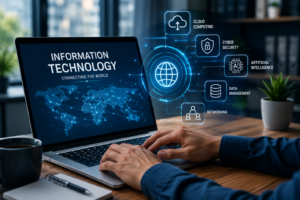
Modern businesses depend heavily on technology.
A company may use technology to communicate with employees, manage finances, market products, analyze customer behavior, store documents, and provide customer support.
Cloud computing has been especially important for businesses. Instead of keeping all data and software on physical computers inside an office, companies can use internet-based services to access computing resources remotely.
This can make it easier for employees to work from different locations and collaborate on projects.
Technology has also made it possible for many businesses to operate remotely. Employees can communicate through video meetings, instant messaging, project management platforms, and shared online documents.
For startups and small businesses, this can reduce some traditional barriers to entering a market. A small team with the right technology can reach customers across the country or even around the world.
However, businesses also need to make responsible technology decisions. Choosing software simply because it is popular may not always be the best approach. Companies need to consider cost, security, scalability, reliability, and the specific needs of their employees and customers.
Artificial Intelligence and the Future of Tech
Artificial intelligence is one of the most discussed areas of technology today.
AI systems can analyze data, recognize patterns, understand language, generate content, and assist with many different tasks. Businesses are increasingly exploring ways to use AI to improve customer service, marketing, software development, research, and business operations.
Generative AI has made this technology more accessible to ordinary users. People can use AI tools to brainstorm ideas, summarize information, write drafts, analyze data, learn new subjects, and automate repetitive work.
However, AI also raises important questions.
Businesses and individuals need to think carefully about privacy, accuracy, copyright, bias, and responsible use. AI-generated information can sometimes be incorrect, so human judgment remains important.
The future of AI will likely involve cooperation between humans and intelligent software rather than simply replacing every human task.
The most successful organizations may be those that learn how to combine human creativity and decision-making with the speed and analytical capabilities of AI.
Cybersecurity Is More Important Than Ever
As technology becomes more important, cybersecurity becomes increasingly critical.
Every day, individuals and organizations store valuable information digitally. This can include passwords, financial information, personal documents, business records, and customer data.
Cybercriminals attempt to access this information through techniques such as phishing, malware, stolen passwords, and other forms of cyberattacks.
For this reason, cybersecurity should not be considered only an issue for large corporations.
Individuals can take simple steps to improve their security. Using strong and unique passwords, enabling multi-factor authentication, keeping software updated, avoiding suspicious links, and backing up important files can significantly reduce certain risks.
Businesses need stronger security strategies because they often manage much larger amounts of sensitive information.
Security awareness training, access controls, encryption, monitoring, backups, and incident response planning can all contribute to a stronger cybersecurity strategy.
As more devices become connected to the internet, cybersecurity will remain one of the most important areas of technology.
Cloud Computing and Connected Devices
Cloud computing has changed the way people and organizations use digital resources.
Instead of relying entirely on local computers and physical servers, users can access storage, applications, databases, and computing power through internet-based services.
This approach provides flexibility and can make it easier for organizations to scale their technology as their needs change.
Another growing area is the Internet of Things, commonly known as IoT. IoT refers to physical devices that connect to the internet and exchange data.
Smart watches, connected home appliances, security cameras, smart thermostats, and industrial sensors are examples of connected devices.
These technologies can make homes and workplaces more efficient, but they also introduce new privacy and security considerations. Every connected device can potentially become part of a larger digital ecosystem, making responsible management increasingly important.
Technology and the Future of Work
Technology is changing the workplace in several ways.
Automation can handle repetitive processes, while digital collaboration tools allow employees to work together from different locations. AI can assist with research and analysis, while cloud-based applications make business information accessible from almost anywhere.
These developments do not necessarily mean that technology will eliminate all jobs. Instead, many jobs are changing.
Workers increasingly need digital skills, critical thinking, communication abilities, and the ability to learn new tools.
This means continuous learning is becoming more valuable. A skill that is highly useful today may become less important as new technology develops.
For professionals, keeping up with technology can therefore be an important part of career development.
Companies also have a responsibility to help employees adapt. Training programs and opportunities to develop new skills can make technological transitions easier for both workers and organizations.
The Advantages of Modern Technology
There are many benefits associated with modern technology.
1. Faster Communication
People can communicate across long distances almost instantly through email, messaging, and video conferencing.
2. Greater Access to Information
The internet provides access to educational materials, research, tutorials, news, and other resources.
3. Improved Productivity
Software and automation can reduce repetitive work and help employees complete tasks more efficiently.
4. Better Business Opportunities
Technology allows companies to reach customers through websites, social media, online marketplaces, and digital advertising.
5. Improved Access to Services
Online banking, telehealth services, digital education, and e-commerce have made many services more accessible.
6. Innovation
Technology provides new ways to solve problems and develop products, services, and business models.
Challenges of Technology
Despite its many advantages, technology also creates challenges.
Privacy is a major concern because companies and digital services collect large amounts of user data. People need to understand how their information is collected, stored, and used.
Cybersecurity is another challenge. As more information moves online, the potential impact of security breaches increases.
Digital addiction and excessive screen time can also affect people’s daily lives. Constant notifications and online activity can make it difficult to disconnect.
There is also a digital divide. Not everyone has equal access to reliable internet connections, modern devices, or digital education.
Finally, rapid technological change can create uncertainty for workers and businesses. Organizations that fail to adapt may struggle to remain competitive, while employees may need to continuously develop new skills.
What Does the Future of Technology Look Like?
The future of technology is difficult to predict precisely, but several trends are likely to remain important.
Artificial intelligence will continue developing, while cloud computing and connected devices will become increasingly common. Cybersecurity will remain essential as more personal and business activities move online.
Robotics, advanced computing, automation, and emerging digital platforms may also change industries in ways that are difficult to imagine today.
The most important factor may not be the technology itself but how people choose to use it.
Technology can improve productivity, expand access to information, and solve complex problems. At the same time, it needs to be developed and used responsibly.
Organizations and individuals that focus on security, privacy, ethical decision-making, and continuous learning will be better prepared for technological change.
Final Thoughts
Technology has moved far beyond being a collection of computers and electronic devices. It has become a foundation of modern life.
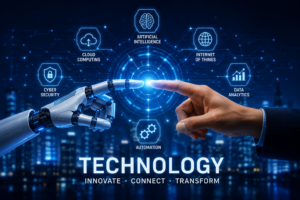
From communication and education to healthcare, business, entertainment, and transportation, information technology affects almost every part of society. New developments in AI, cloud computing, cybersecurity, and connected devices are continuing to accelerate this transformation.
For individuals, understanding technology can make everyday digital experiences safer and more productive. For businesses, using the right tech can improve efficiency, customer experiences, and competitiveness.
The future will undoubtedly bring new challenges and opportunities. Rather than trying to predict every innovation, the better approach is to stay curious, continue learning, and understand how technology can be used responsibly.
As technology continues to evolve, one thing is certain: its influence on the way we live and work will only become more significant.
Frequently Asked Questions About Technology
What is technology?
Technology is the collection of tools, systems, techniques, and processes people use to solve problems, complete tasks, and improve efficiency. Modern technology includes computers, smartphones, software, artificial intelligence, networks, and many other digital and physical systems.
Why is information technology important?
Information technology helps people and organizations create, store, process, protect, and share information. It supports communication, business operations, education, healthcare, banking, entertainment, and many other areas.
What are some examples of modern tech?
Examples include smartphones, cloud computing, artificial intelligence, cybersecurity systems, smart home devices, software applications, wearable devices, robotics, and internet-connected products.
How does technology help businesses?
Technology can help businesses automate repetitive tasks, communicate with customers, manage information, analyze data, support remote work, improve productivity, and reach new markets.
Is technology changing jobs?
Yes. Technology is changing the tasks people perform and the skills employers need. Automation and AI can handle certain repetitive activities, while new technology also creates demand for professionals with digital, technical, creative, and analytical skills.
Why is cybersecurity important?
Cybersecurity helps protect computers, networks, accounts, and digital information from unauthorized access, attacks, and other threats. As more activities move online, strong cybersecurity practices become increasingly important.
What is the future of technology?
The future will likely include continued advances in artificial intelligence, automation, cloud computing, cybersecurity, robotics, and connected devices. These developments may create new opportunities while also requiring people and organizations to adapt continuously.